Location & Historical Background
Romantic Setting
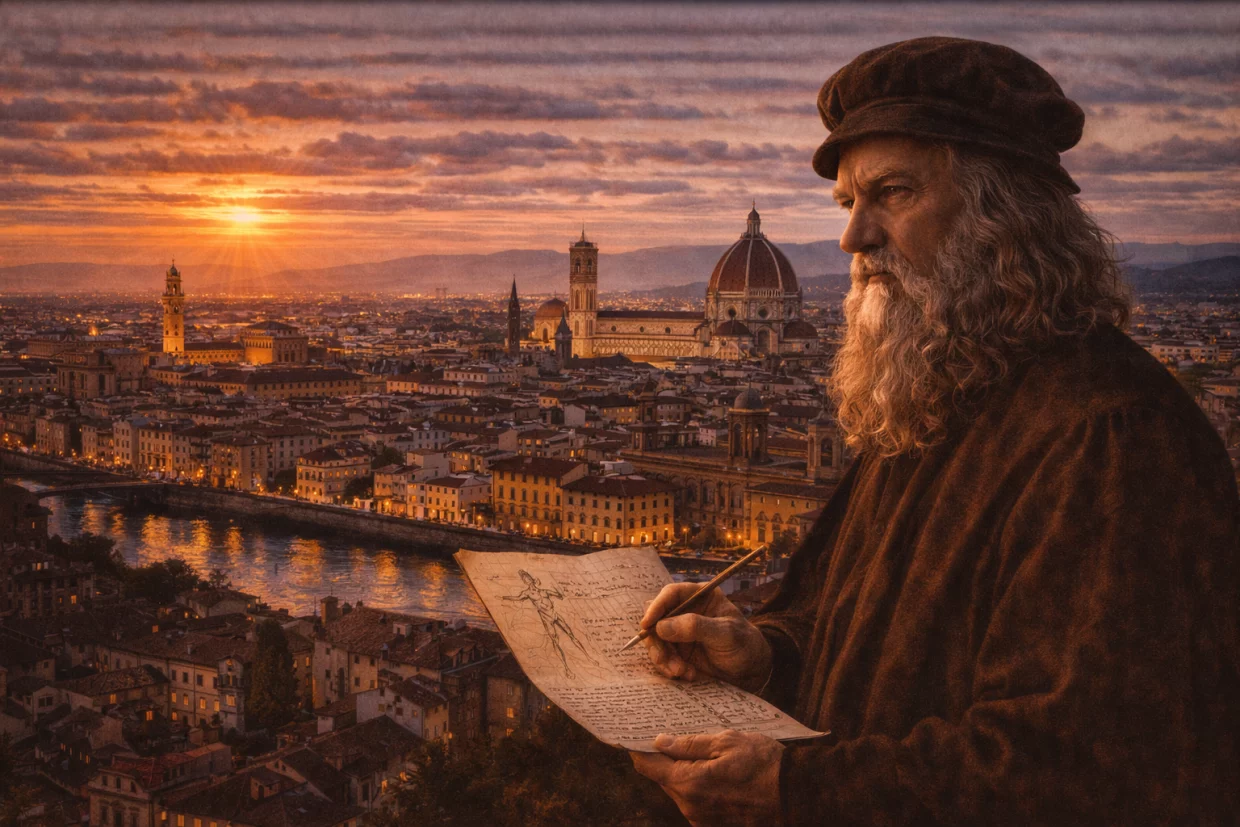
Florence lies in central Italy along the Arno River, surrounded by gentle Tuscan hills dotted with vineyards, olive groves, and stone villages. Warm light reflects off terracotta roofs, and viewpoints reveal a city that looks composed from every angle. Today, visitors are struck by how naturally Florence blends landscape, proportion, and urban harmony.
Origins & Foundation
Founded as the Roman colony Florentia in 59 BC, Florence began as a military settlement before slowly evolving into a medieval commune. Legend claims the city was named for flowers because even the Romans sensed this place would eventually bloom. Its true destiny, however, arrived centuries later with commerce, banking, and ideas.
The Three Greatest Blows
Black Death (1348)
In 1348, the plague wiped out nearly half of Florence’s population. Workshops closed, families vanished, and the city was traumatized. Paradoxically, this catastrophe reshaped society and laid groundwork for the Renaissance by redistributing wealth and power.
Exile of the Medici (1494)
In 1494, the ruling Medici family was expelled during a political uprising. Florence plunged into instability, religious extremism, and uncertainty, briefly losing the patrons who had fueled its artistic explosion.
Flood of the Arno (1966)
In 1966, the Arno River flooded Florence, damaging priceless artworks, libraries, and churches. The disaster sparked a global effort to save cultural heritage and redefined modern art conservation.
The Golden Age
Florence’s golden age was the 15th century, when the Medici family transformed the city into the cradle of the Renaissance. Banking wealth funded artists like Michelangelo, Leonardo da Vinci, and Botticelli, reshaping Western art, science, and philosophy forever.
Why Visit the City Today
Today, Florence remains astonishingly alive. Its museums are unmatched, its streets are walkable works of art, and its cuisine reflects centuries of refined simplicity. Beyond the masterpieces, Florence rewards patience—step into a quiet church, cross the river, or watch the city glow at sunset and it reveals its softer side.
Tourist Information & Must-See Places
Practical Information (Estimated Averages)
- Average lunch: €12–18
- Average accommodation (per night): €130–220
- One beer: €4–6
- One coffee (espresso): €1.50–3
Most Interesting Parts of the City
Historic center, Duomo area, Oltrarno district, Arno riverbanks, and the surrounding hill viewpoints.
Top 3 Must-See Attractions
Florence Cathedral (Duomo)
A masterpiece of Gothic and Renaissance engineering, crowned by Brunelleschi’s dome—still a miracle of architecture centuries later.
Uffizi Gallery
One of the world’s greatest art museums, housing definitive works of the Renaissance that changed how humanity sees itself.
Ponte Vecchio
Florence’s most iconic bridge, lined with shops and steeped in history, spanning the Arno with timeless grace.
Final Summary
Florence doesn’t compete for attention—it defines standards. Come for the masterpieces and history, stay for the rhythm of Tuscan life, and leave knowing that beauty, once properly invented, never really goes out of style.
Tags: Italy