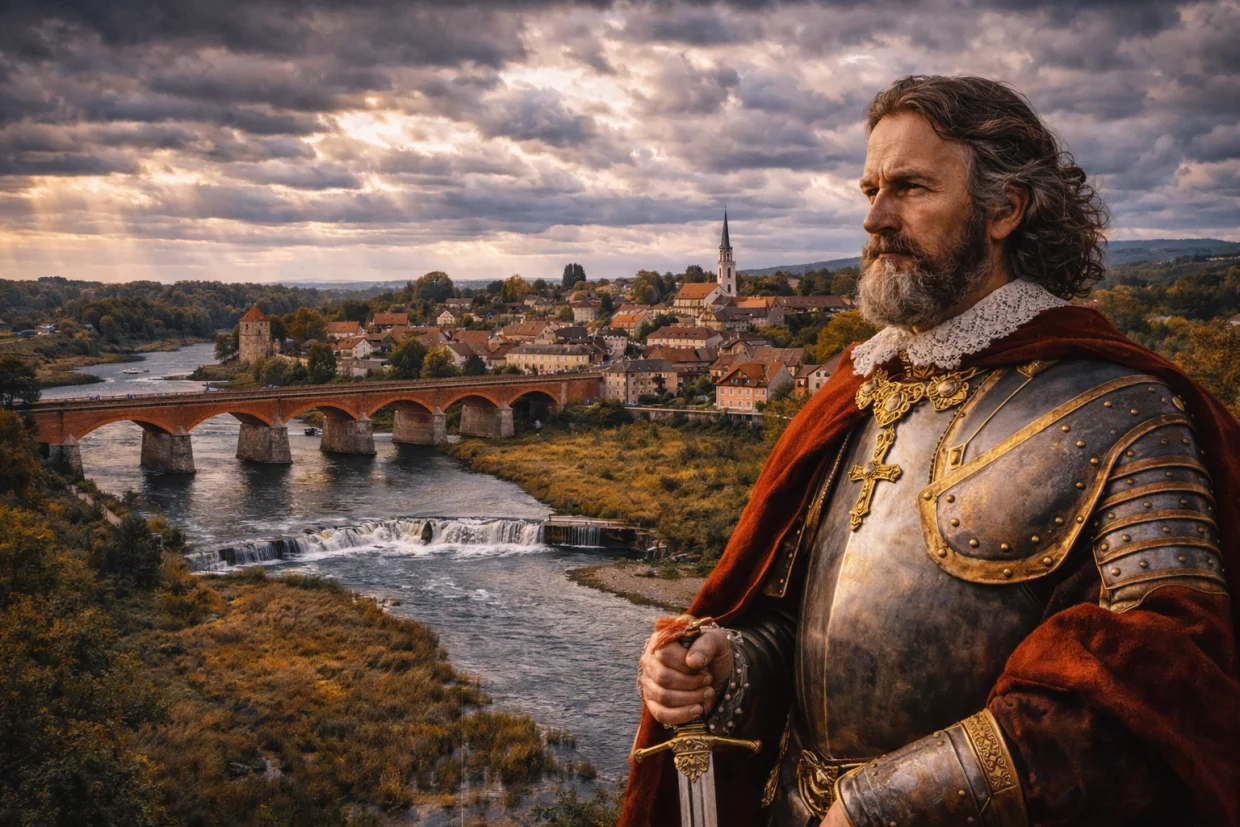
Location and Historical Background
Kuldīga lies in western Latvia, gently spread along the Venta River, surrounded by forests, meadows, and softly rolling countryside. The town feels intimate and calm, shaped by water rather than traffic. Today, visitors are immediately drawn to its historic center, wooden architecture, arched bridge, and the constant presence of the river that defines both sound and movement.
Kuldīga was first mentioned in 1242, developing around a castle built by the Livonian Order. Legend says the town grew where merchants stopped to admire the river so long that trading simply followed. Whether strategic or accidental, Kuldīga became an important regional center early on.
The Three Greatest Blows to the City
The Livonian War (1558–1583)
Kuldīga suffered during the Livonian War as armies passed through the region, disrupting trade and stability. The town changed hands multiple times, infrastructure was damaged, and economic life slowed significantly.
The Great Northern War and Plague (1700–1721)
During the Great Northern War, Kuldīga experienced population loss and economic decline. In 1710, plague outbreaks devastated communities across Latvia, including Kuldīga, leaving long-lasting demographic and social scars.
Loss of Political Importance (18th–19th centuries)
As regional power centers shifted and industrialization favored larger cities, Kuldīga gradually lost political and economic significance. While this decline limited growth, it also preserved the town’s historic character almost intact.
The Golden Age of Kuldīga
Kuldīga’s golden age came in the 16th and 17th centuries, when it served as one of the residences of the Dukes of Courland and Semigallia. Trade, craftsmanship, and administration flourished, leaving behind a rich urban fabric that still defines the town today.
Why Kuldīga Is Worth Visiting Today
Kuldīga offers something increasingly rare: authenticity without performance. Its streets feel lived-in rather than curated, and its pace invites visitors to slow down naturally. The town is perfect for weekend escapes, cultural exploration, and quiet reflection surrounded by beauty that feels effortless.
In summary, Kuldīga is not about ticking sights off a list—it’s about absorbing atmosphere. The longer you stay, the more it gives.
Tourist Information and Must-See Sights
Estimated Prices
- Average lunch: €9–13
- Mid-range hotel (per night): €70–110
- One beer (0.5 l): €4–5
- One coffee: €2.50–3.50
The most attractive areas include the old town, riverbanks, bridge area, and nearby countryside.
Must-Visit Places
Venta Rapid
The widest waterfall in Europe, stretching across the Venta River. In spring and autumn, fish can be seen jumping upstream—a natural spectacle unique to Kuldīga.
Kuldīga Old Town
One of the best-preserved historic town centers in Latvia, featuring wooden houses, narrow streets, and a peaceful, authentic atmosphere.
Brick Bridge of Kuldīga
A picturesque 19th-century brick bridge offering the best views of the river and waterfall, especially at sunset.
Final Summary
Kuldīga doesn’t compete for attention—it waits patiently. Come curious, walk slowly, and leave with the strange feeling that you’ve visited a place that never needed to change to stay relevant.