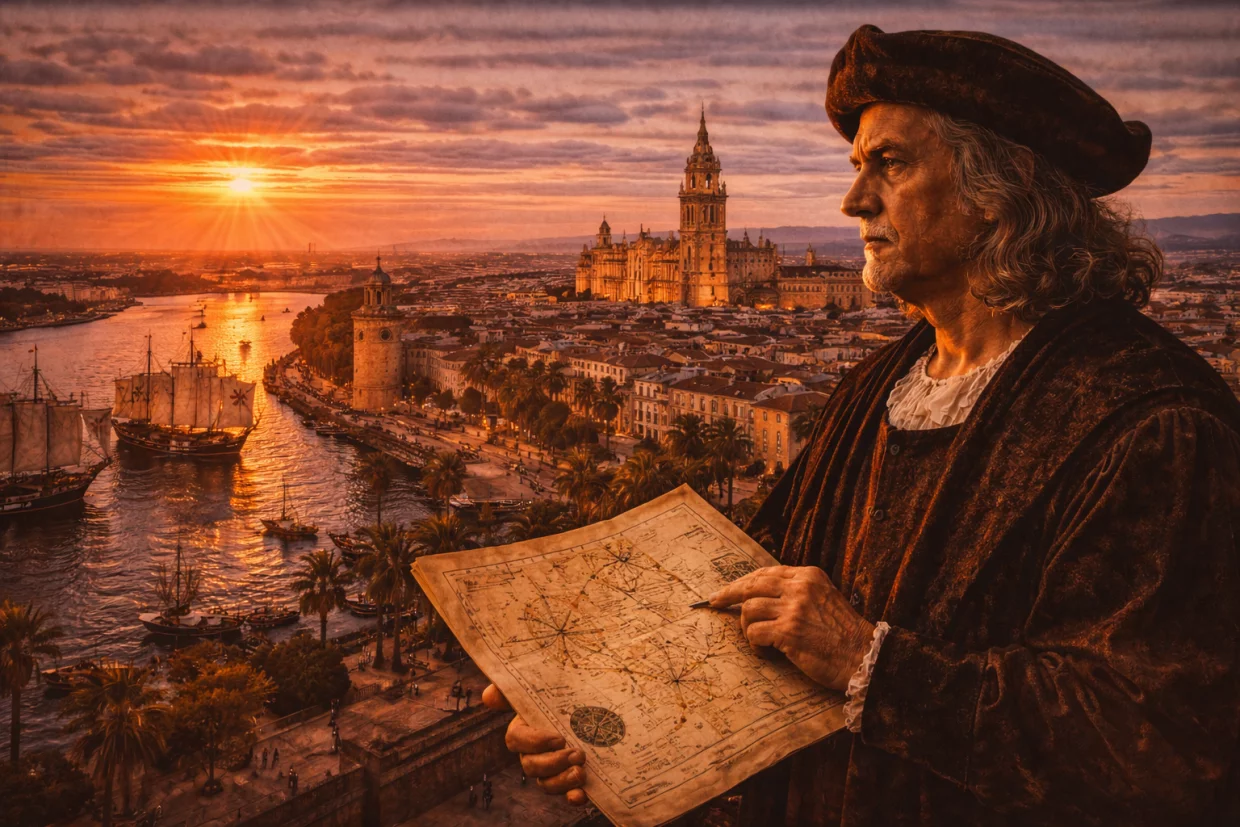
Location and Historical Backdrop
Seville lies in the heart of Andalusia, spread across the fertile plains of the Guadalquivir River, surrounded by orange trees, flat horizons, and relentless southern sunlight. Summers are famously intense, winters mild, and the city seems permanently dipped in golden light. Today, Seville overwhelms visitors with monumental beauty, slow rhythms, and a sense that time here follows its own rules.
Founded long before Rome, Seville gained prominence as Roman Hispalis, later flourishing under Moorish rule as Ishbiliya. Legend claims Hercules himself founded the city—apparently impressed enough by the river and land to settle down. Each civilization left layers behind, making Seville a living museum of empires, faiths, and cultures.
The Three Biggest Blows Seville Endured:
- The Christian Reconquest (1248)
In 1248, Seville fell to King Ferdinand III of Castile after a long siege. The city was dramatically reshaped—mosques converted into churches, populations displaced, and power structures overturned. It marked the end of Muslim rule and a deep cultural transformation. - The Black Death (14th Century, 1348)
The plague struck Seville brutally, killing a significant portion of the population. Trade collapsed, neighborhoods emptied, and fear ruled daily life. The city’s recovery took decades, leaving lasting demographic and economic scars. - Decline of River Trade (17th Century)
As the Guadalquivir River silted up and Atlantic trade shifted to Cádiz, Seville lost its monopoly over New World commerce. Once Europe’s richest port city, it slipped into economic decline—an especially painful fall after unimaginable wealth.
The Golden Age of Seville
Seville’s true golden age came in the 16th century, when it held exclusive trading rights with the Americas. Gold, silver, spices, and ideas flowed through its port, making Seville one of the richest cities in Europe. Artists, architects, and merchants thrived, and monumental projects reshaped the skyline—many of which still define the city today.
Why Seville Is Worth Visiting Today
Modern Seville is intoxicating. It offers jaw-dropping monuments, intimate courtyards, vibrant festivals, and a food culture built on sharing and staying out late. Flamenco here isn’t a show—it’s a language. Streets feel theatrical, locals expressive, and even ordinary evenings turn memorable.
In short, Seville doesn’t try to impress—it simply exists, and that’s more than enough.
Tourist Information and Must-See Goals
Average Costs (Estimated):
- Average lunch: €12–15
- Mid-range accommodation (per night): €85–120
- One beer: €2.50–4
- One coffee: €1.70–2.50
Most Interesting Areas for Visitors:
Santa Cruz, Triana, El Arenal, Alameda de Hércules.
Three Must-Visit Highlights:
- Seville Cathedral & Giralda
One of the largest Gothic cathedrals in the world, crowned by a former minaret turned bell tower. The views—and the symbolism—are unforgettable. - Plaza de España
Grand, theatrical, and unapologetically dramatic. Built for the 1929 Ibero-American Expo, it’s Seville showing off—and doing it well. - Real Alcázar of Seville
A stunning blend of Islamic, Gothic, and Renaissance styles. Still in use by Spanish royalty, and arguably one of the most beautiful palaces in Europe.
Final Summary
Seville is not a city you conquer—it conquers you. Slowly, warmly, and permanently. Expect to sweat, slow down, and fall a little bit in love.
Tags: Spain