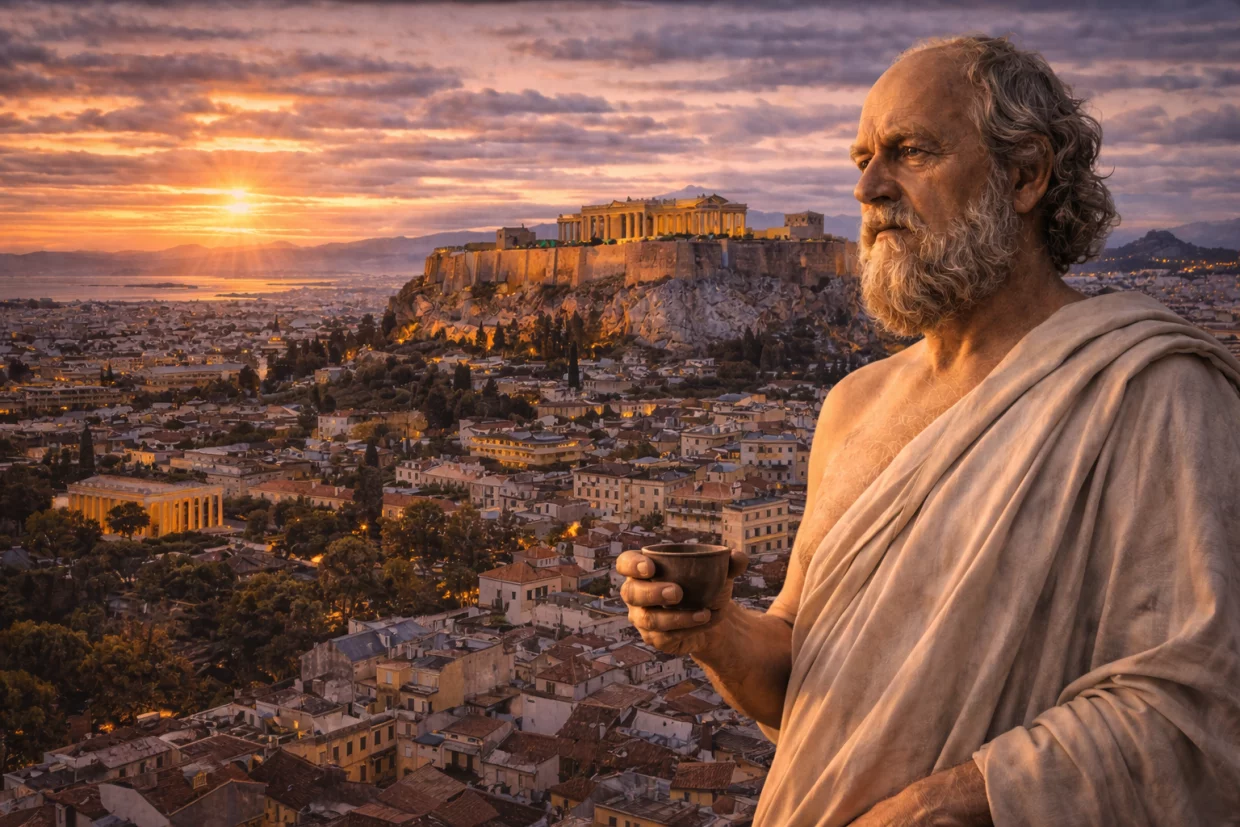
Location and Historical Background
Athens spreads across the Attica plain in southern Greece, framed by mountains on three sides and opening toward the Aegean Sea. Olive trees, rocky hills, and dry Mediterranean light define the landscape. Today, Athens impresses visitors with its contrasts: ancient temples above busy avenues, rooftop bars facing ruins, and everyday life unfolding in the shadow of global heritage.
Human presence here dates back over 5,000 years, making Athens one of the world’s oldest continuously inhabited cities. Myth says the city was named after the goddess Athena, who won its patronage by gifting the olive tree—practical, symbolic, and still relevant. Few myths have aged so well.
First great blow – Persian destruction (480 BCE):
In 480 BCE, Persian forces under Xerxes invaded and burned Athens after its evacuation. Temples on the Acropolis were destroyed, and the city was left in ruins. Yet this catastrophe sparked one of history’s greatest rebuilds, leading directly to Athens’ cultural peak.
Second great blow – Peloponnesian War and plague (431–404 BCE):
During the Peloponnesian War, Athens faced prolonged conflict with Sparta. A devastating plague struck in 430 BCE, killing up to a third of the population, including Pericles. The war ended in defeat in 404 BCE, breaking Athenian dominance.
Third great blow – Ottoman rule and decline (1458–1830):
Athens fell to the Ottomans in 1458, becoming a minor provincial town. Classical monuments were neglected or repurposed, and the city faded from prominence until Greek independence in the 19th century.
Golden Age – Classical Athens (5th century BCE):
Athens’ golden age came in the 5th century BCE, when democracy flourished, philosophy thrived, and art reached extraordinary heights. Figures like Socrates, Plato, and Pericles shaped ideas that still influence the world today. The Parthenon became not just a building, but a statement of human ambition.
Why Athens Is Worth Visiting Today
Modern Athens is raw, creative, and alive. It’s a city where history doesn’t sit quietly—it argues, protests, performs, and reinvents itself. Neighborhoods buzz with cafés, street art, music, and political debate, while archaeological sites appear unexpectedly between apartment blocks.
What makes Athens special today is its honesty. It’s not polished or gentle, but it’s deeply authentic. Visitors who give it time discover a city that rewards curiosity with layers of meaning, flavor, and emotion far beyond its famous ruins.
Tourist Information and Must-See Places
- Average lunch: €10–15
- Average accommodation (mid-range hotel): €90–140 per night
- One beer: €4–6
- One coffee: €3–4
Most interesting areas:
Plaka, Monastiraki, Acropolis area
Acropolis of Athens
The city’s defining landmark and one of the most important sites on Earth. The Parthenon and surrounding temples embody classical ideals and dominate both the skyline and historical imagination.
Ancient Agora
Once the heart of Athenian democracy and daily life, this open space allows visitors to walk where philosophers debated and citizens voted, offering context beyond monumental architecture.
National Archaeological Museum
Home to one of the world’s greatest collections of ancient Greek artifacts, from sculptures to gold treasures. It deepens understanding of Greece far beyond Athens alone.
Final Summary
Athens doesn’t try to impress—it already knows it changed the world. Loud, layered, and endlessly argumentative, it’s a city where the past refuses to stay past. Visit Athens not for comfort, but for perspective. Few cities will ever challenge your mind quite like this one.
Tags: Greece • Mediterranean • Turkey • War