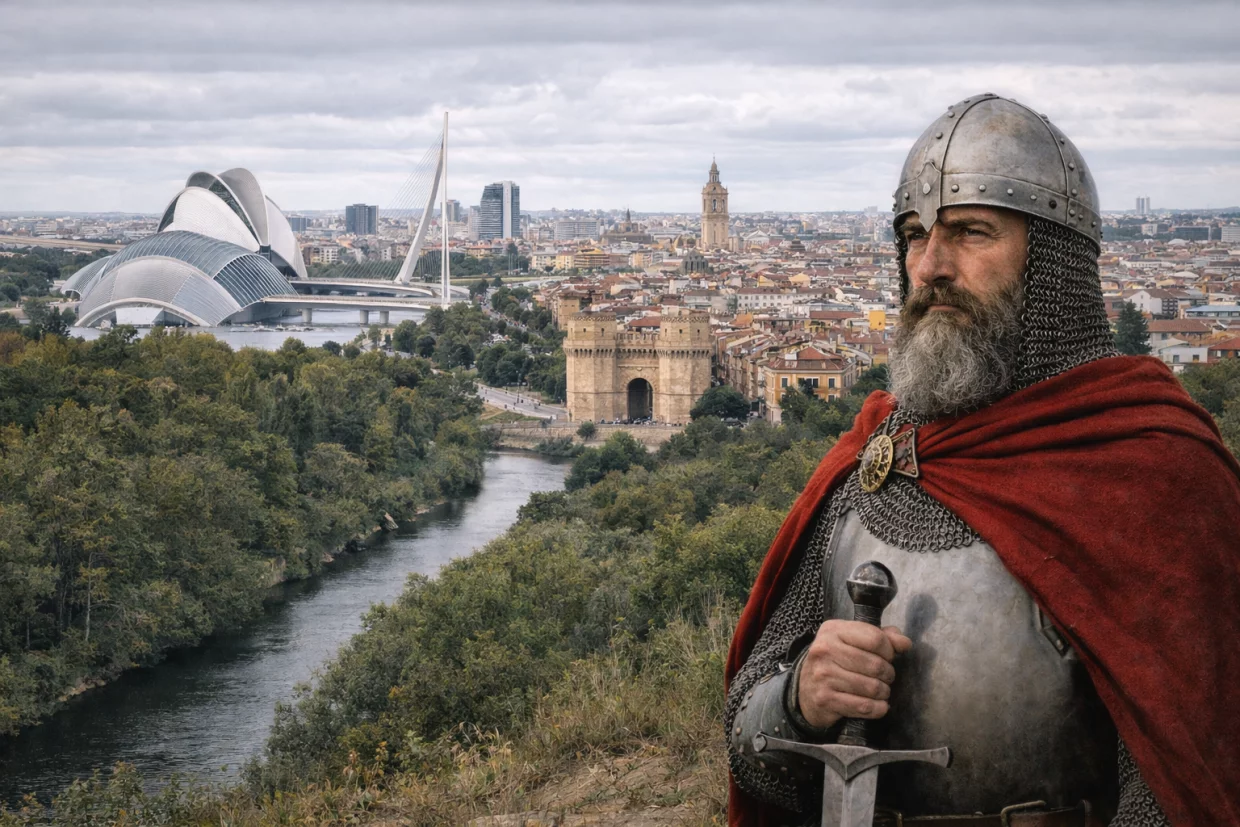
Location and Historical Backdrop
Valencia lies on Spain’s eastern Mediterranean coast, framed by sandy beaches, fertile plains, and endless orange groves. The city is flat, bright, and breezy, with the sea shaping both its climate and personality. Today, visitors are stunned by how seamlessly medieval towers, green parks, and ultra-modern structures blend into one relaxed urban rhythm.
Founded in 138 BC by the Romans as Valentia, the city has been continuously inhabited for over two millennia. A popular legend claims it was named to celebrate courage and strength—qualities Valencia would need often. Over centuries, Romans, Visigoths, Moors, and Christians all left their mark, turning the city into a layered historical mosaic.
The Three Biggest Blows Valencia Endured:
- The Reconquista and Conquest by James I (1238)
In 1238, Christian forces captured Valencia from Moorish rule. While it marked a new political beginning, it also brought population displacement and cultural upheaval. Mosques were converted, laws rewritten, and society reshaped almost overnight. - The Black Death and Medieval Plagues (14th Century)
Like much of Europe, Valencia suffered devastating plague outbreaks, especially around 1348. Trade slowed, neighborhoods emptied, and economic momentum was sharply interrupted during what should have been a prosperous period. - The Spanish Civil War (1936–1939)
Valencia served as the capital of Republican Spain for a time and became a strategic bombing target. Infrastructure damage, civilian casualties, and post-war repression left long-lasting scars on the city.
The Golden Age of Valencia
Valencia’s golden age arrived in the 15th century, when it became one of the Mediterranean’s most important trading ports. Silk trade, banking, and agriculture brought wealth and influence. During this period, Valencia rivaled Barcelona economically and culturally, leaving behind architectural gems that still define the old city.
Why Valencia Is Worth Visiting Today
Valencia excels at balance. You can explore Gothic churches in the morning, bike through a former riverbed at noon, swim in the Mediterranean by afternoon, and dine on world-class cuisine by night. The city feels livable, spacious, and human—without sacrificing excitement.
In short, Valencia offers the Spain many travelers hope to find: authentic, sunlit, creative, and comfortably unhurried.
Tourist Information and Must-See Goals
Average Costs (Estimated):
- Average lunch: €11–14
- Mid-range accommodation (per night): €85–130
- One beer: €2.50–4
- One coffee: €1.70–2.50
Most Interesting Areas for Visitors:
Ciutat Vella, Ruzafa, El Carmen, Cabanyal, City of Arts and Sciences area.
Three Must-Visit Highlights:
- City of Arts and Sciences
A futuristic architectural complex that defines modern Valencia. Museums, aquariums, and science spaces wrapped in bold, surreal design. - Turia Garden
A nine-kilometer green park built in a former riverbed. Perfect for walking, cycling, picnics—and proof that smart urban planning matters. - Malvarrosa Beach
Wide, sandy, and relaxed. Easily accessible from the city center and ideal for ending a day with sea air and sunset views.
Final Summary
Valencia feels like Spain after it learned how to relax without losing ambition. It’s stylish but friendly, historic but forward-looking—and once you taste paella in its hometown, there’s no going back.
Tags: Spain